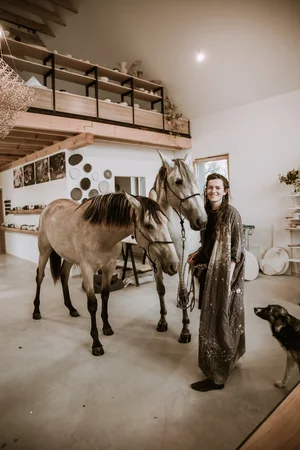
There's a romantic image of horses grazing peacefully in the Latvian countryside — and it's true, ours do. But behind that peaceful picture is a very real spreadsheet, and this year I decided to actually sit down and add it all up. Here's the honest breakdown.
Tack: less than you'd think
Having had horses for 10 years now, most of our tack is already in place — blankets, fly masks, the everyday essentials. The one real investment this year was a new pair of Scoot Boots for each horse, since all four are barefoot. Those run €240–300 per pair, per horse — a cost that's specific to barefoot management, but one that pays off in hoof protection.
Vet & farrier: no big emergencies, but plenty of questions
We were fortunate not to face any major emergencies this year. But Livino did reveal a hidden lameness that sent us down a path of x-rays and several professional opinions — and in the end, no single diagnosis, just more detailed farrier guidelines to work with, since he appears to have mismatched feet. Beyond that, there was the usual yearly dental work and deworming, plus regular farrier visits: we're charged €40 per horse, and on a 4-week cycle, that means a monthly trim for each of them.
Between farrier (€1,920) and other vet expenses (€1,719), the combined cost came to €76 per horse, per month.
Feed: the steady monthly cost
Feed breaks down to about €63 per horse per month for hay and straw, plus around €150 per horse per month in supplements. On top of that, we invested €352 in new grass seed for the pasture this year — a one-off, but worth mentioning since pasture quality feeds directly into everything else. All together, feed comes to roughly €220 per horse, per month.
The team behind the herd
None of this happens without daily care. Our groom works 4 hours a day, year-round, which comes to €10,080 annually.
That daily care looks like this: the tracks and stable are mucked out every single day, rain or shine, and around 12 haynets are hung around the tracks to keep forage available throughout the day. Our hay is also steamed — Livino has asthma, and Sahara has a mild dust sensitivity, so this small extra step makes a real difference to their comfort and health. Steaming itself takes 80 minutes per portion, and we run at least 2–3 portions every day, which gives a real sense of just how much time goes into the little things that keep this herd comfortable.
Track & stable improvements: the investment year
This is where the real crunch happened. We bought two plastic tubs for open water and steamed hay (€686) and slow feeders (€303) to support better feeding habits. But the bigger project was improving the tracks themselves: €3,213 for gravel, €500 for geotextile fabric, and €1,000 to rent a tractor — plus a full week of my husband's volunteering labour to actually surface the tracks by hand. We also added €1,889 in rubber tiles for high-traffic areas (Cover Power - Latvian company that makes them from recycled tires), along with €214 for fly traps. All together, the stable/inventory total came to roughly €7,805 for the year, or €163 per horse, per month.
One could argue this should be spread across several years rather than counted in one — and that's fair. But honestly, improvements like this happen almost every year here, just rarely at this scale. So for now, we're counting it as it fell.
Sending horses to "university": training in the Czech Republic
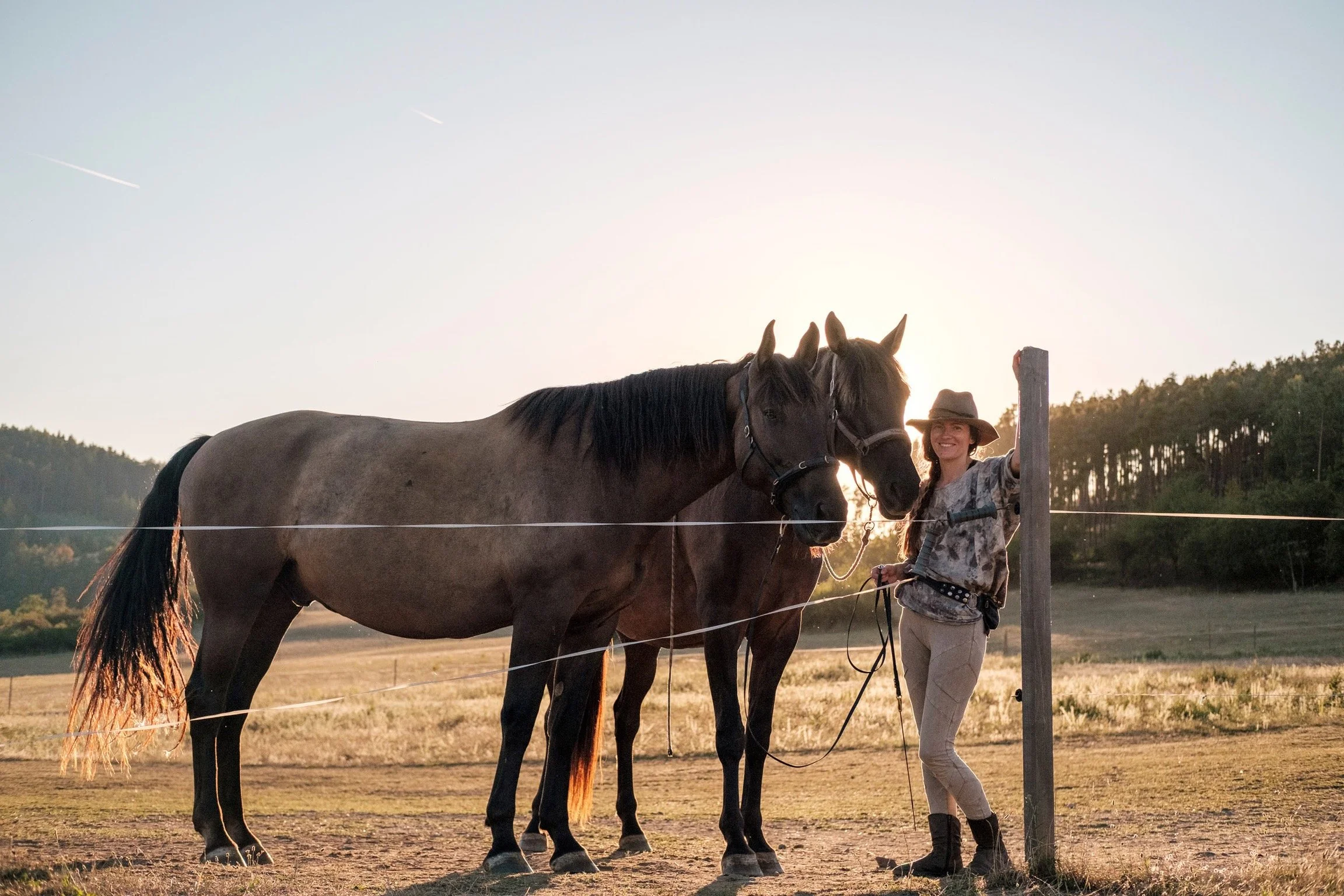
Two of our horses spent three months training in the Czech Republic this year — and the closest comparison I can make is sending a child off to university. There's tuition, there's boarding, and there's the trust that time away will come back home as skill and confidence.
Training itself came to €4,438, with boarding adding another €2,411, for a total of €6,849.
We were quoted around €1,200 per trip for transport, which would have added up to roughly €4,800 total. Instead, we drove them there and back ourselves to save on that cost — a decision that took more of our own time, but kept the budget in check.

The bottom line
Add it all together — tack, vet, farrier, feed, stable improvements, training, and the wage for our year-round horse help — and keeping our herd of 4 horses came to roughly €9,998 per horse, per year, or about €833 per horse, per month. Across the whole herd, that's close to €40,000 for 2025.
It's a number that surprises people when I say it out loud. But breaking it down like this — feed here, training there, environment improvements that pay forward into future years.
Looking Ahead: 2026 Brings Bigger Investments
If 2025 was the year of track and stable improvements, 2026 has been the year of bigger, longer-term investment. The standout purchase was a small tractor, which now lets us feed from big bales directly — a real saver in both time and manpower compared to handling smaller bales by hand.
We also made a switch on the nutrition side: moving to ForagePlus, which has been genuinely excellent. Interestingly, it actually let us bring supplement costs down — from €150 to €100 per horse, per month — while giving better nutrition overall. A rare case of spending less and getting more. If you’d like to try Forageplus, you can use our affiliate discount code: LAIMA10 for 10% off
We'll share the full 2026 totals once the year wraps up in December.